Episode 7 — The Things Under the Desks

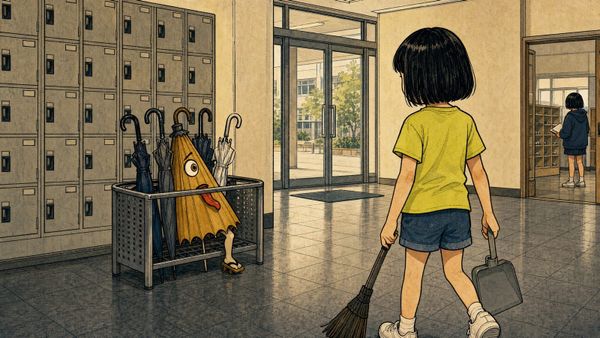
The new homeroom teacher, Mr. Aoki, had been at Kinoshita Elementary for three weeks.
He was, by all accounts, a perfectly reasonable person. He had a calm voice and good handwriting and brought his own tea to school in a thermos. His one complaint — voiced to the vice principal on a Tuesday, in the flat tone of someone who has decided to treat the inexplicable as an administrative matter — was that things kept moving.
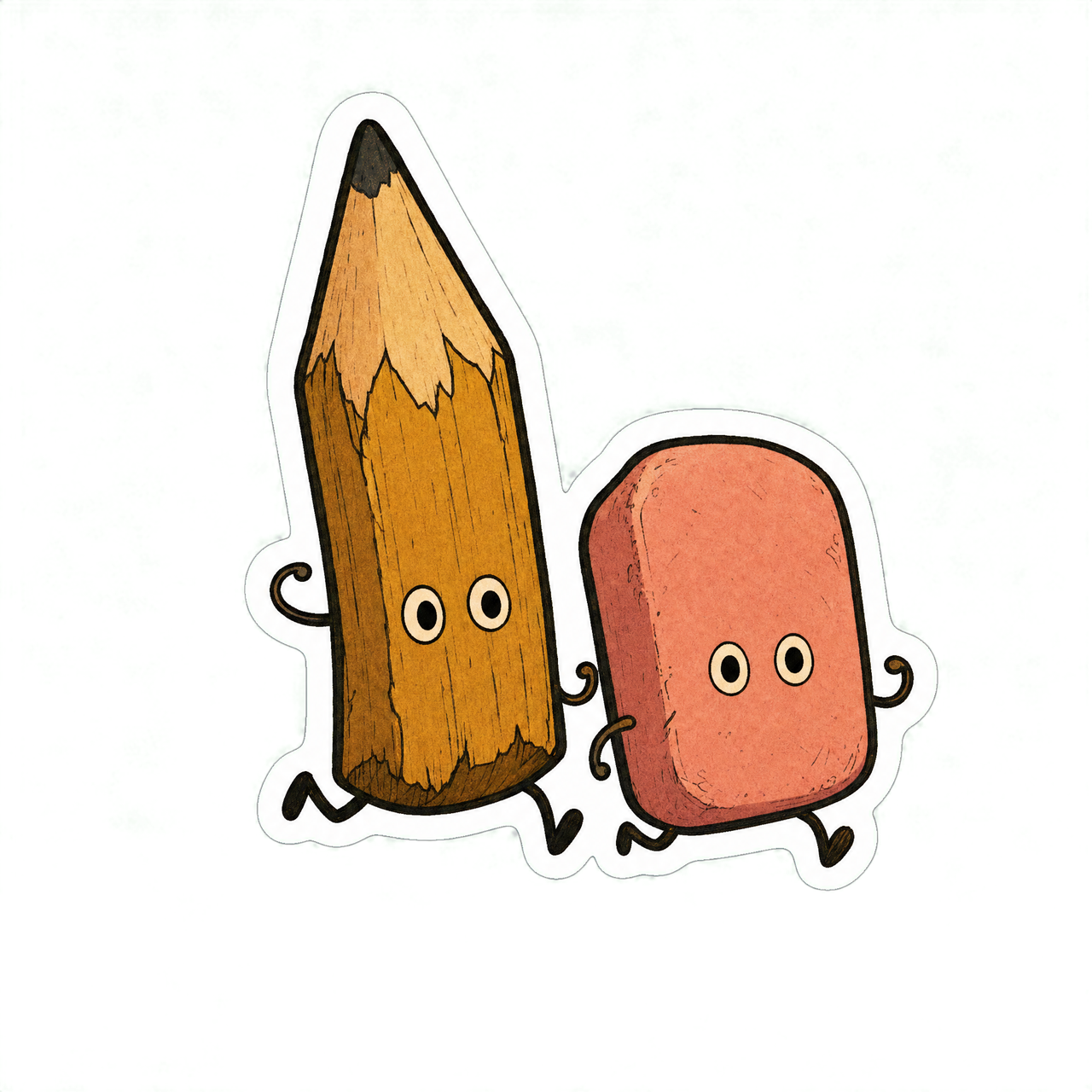
Not students. Things. Pencil stubs. Bits of eraser. A half-ruler. A dried-out marker he was fairly sure he'd thrown away twice.
“They move,” he said. “Between lessons.”
The vice principal said he would look into it. He then called the shrine, because he was getting very good at knowing which problems were which.
Myu had suspected something was living under the desks since October.
The old Room 4 desks were wooden — the heavy, serious kind from before schools decided furniture should be cheerful — and they had gaps at the base where the legs met the floor. Gaps just large enough for something small to disappear into. Myu had seen movement there three times and told Ryu, who had written it down without particular surprise, because Ryu’s notebook was full of things Myu had seen and nobody else had.
When Rin called and said she was coming to look into the desk situation, Myu said “I know what it is” before Rin had finished explaining.
“You don’t know yet,” Ryu said.
“I know the ‘shape’ of what it is,” Myu said.
She was approximately correct.
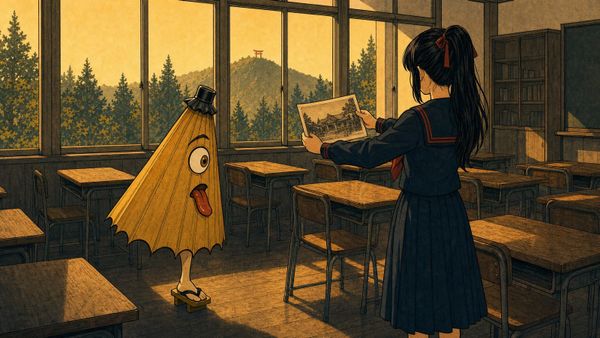
They went at lunch — when the classroom was empty, the afternoon light making long rectangles on the floor, the particular silence of a room that’s been full of children all morning and is now taking a moment.
Myu positioned herself by the door. Ryu took the far corner. They’d done this before.
“Ready?” Myu said.
Ryu opened her notebook. “Ready.”
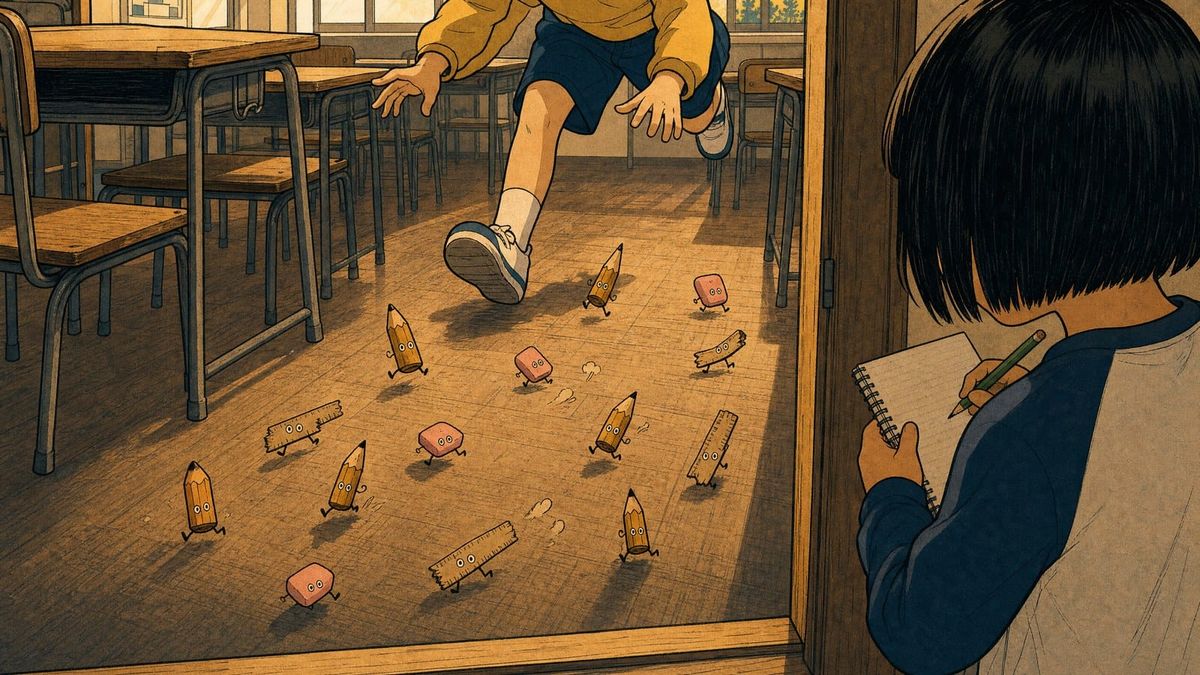
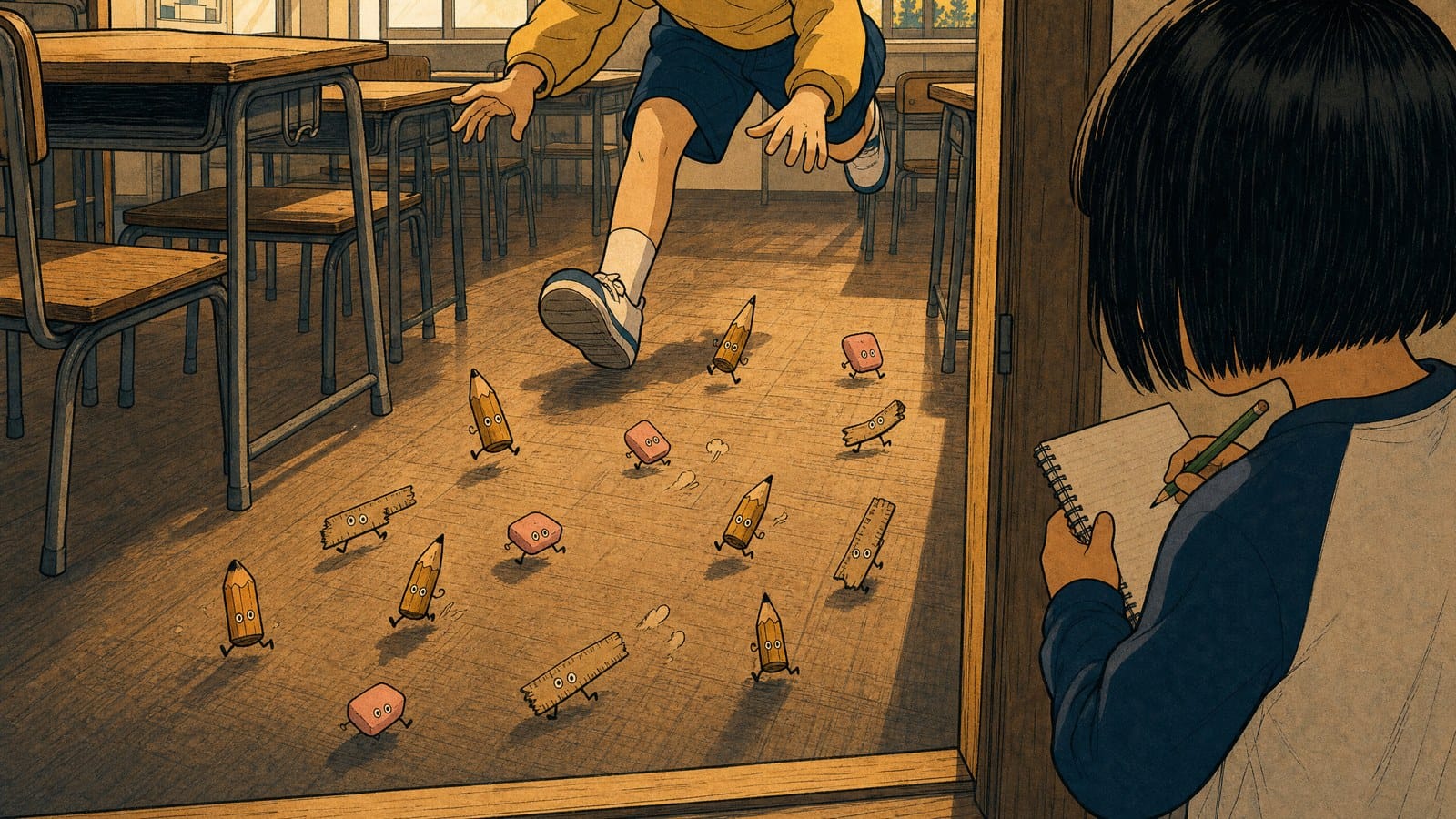
Myu scraped her foot loudly against the floor.
Twelve things ran.
They scattered from the desk gaps with the coordinated panic of something that had been disturbed at a meeting — a broken pencil stub going left, three eraser fragments going right, a half-ruler sliding under the teacher’s desk, something that might have been a dried-out marker making for the supply cupboard at a pace that seemed physically impossible for a marker.
Myu was already moving. “CORNER! RYU, THE CORNER—”
“I see it,” Ryu said, very calmly, stepping sideways to block the route to the storage shelves. She was writing something with her free hand.
The pencil stub ran directly into Ryu’s shoe, bounced, reconsidered its route, and reversed.
Myu caught it.
It was warm. It had two small eyes — the kind that are more suggestion than anatomy, pressed into the wood grain of the pencil’s surface — and it looked up at her with the expression of something that had been in this school for twenty years and had opinions about being caught.
“Got one!” Myu announced, to no one, because Ryu was busy methodically blocking the supply cupboard and the pencil stub had already accepted its situation.
By the time Rin arrived, Myu had seven of them in a shoebox with holes poked in the lid, Ryu had a complete census in her notebook, and the half-ruler was still under the teacher’s desk and refusing to come out.
“Twelve total,” Ryu said. “Pencil stubs, four. Eraser fragments, three. One ruler, partial. Two chalk pieces. One marker, dried-out. One unknown — possibly a button.”
Rin crouched and looked at the box. Seven pairs of small eyes looked back.
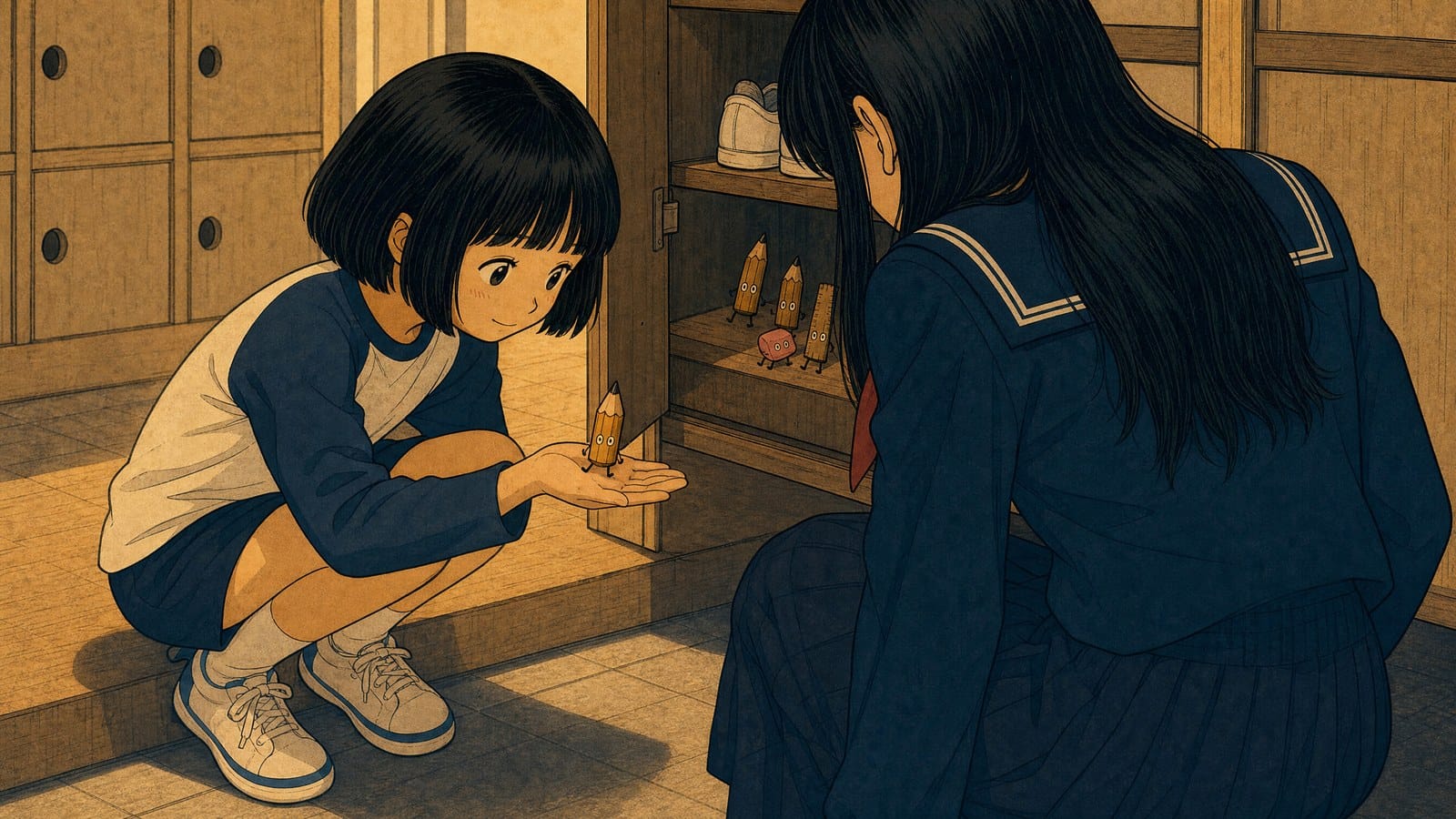
“They’re old,” she said. “How long have these desks been here?”
“Since before anyone remembers,” the vice principal said, from the doorway, where he had manifested at some point without anyone noticing.
Rin sat back on her heels. Twenty-year-old pencil stubs. Chalk from before the whiteboards came in. Eraser fragments from children who had graduated and gone on to schools and jobs and lives and had never thought about what happened to the last centimeter of their erasers.
“They’ve been here longer than any of the students,” she said. “Longer than most of the teachers.” She looked at the shoebox. “They’re the school’s.”
“So what do we do with them?” Myu asked. She had the pencil stub in her hand now. It had stopped trying to escape and was sitting in her palm with the resigned air of something that has accepted the next phase of its existence.
“The art room,” Rin said. “They want to be useful. Art supplies get used longer than other things. They’d have company.”
The half-ruler came out from under the teacher’s desk when Rin explained, very specifically, that the art room had a collection of old rulers that nobody could bear to throw away because they still mostly worked.
It considered this for a long moment. Then it came out.
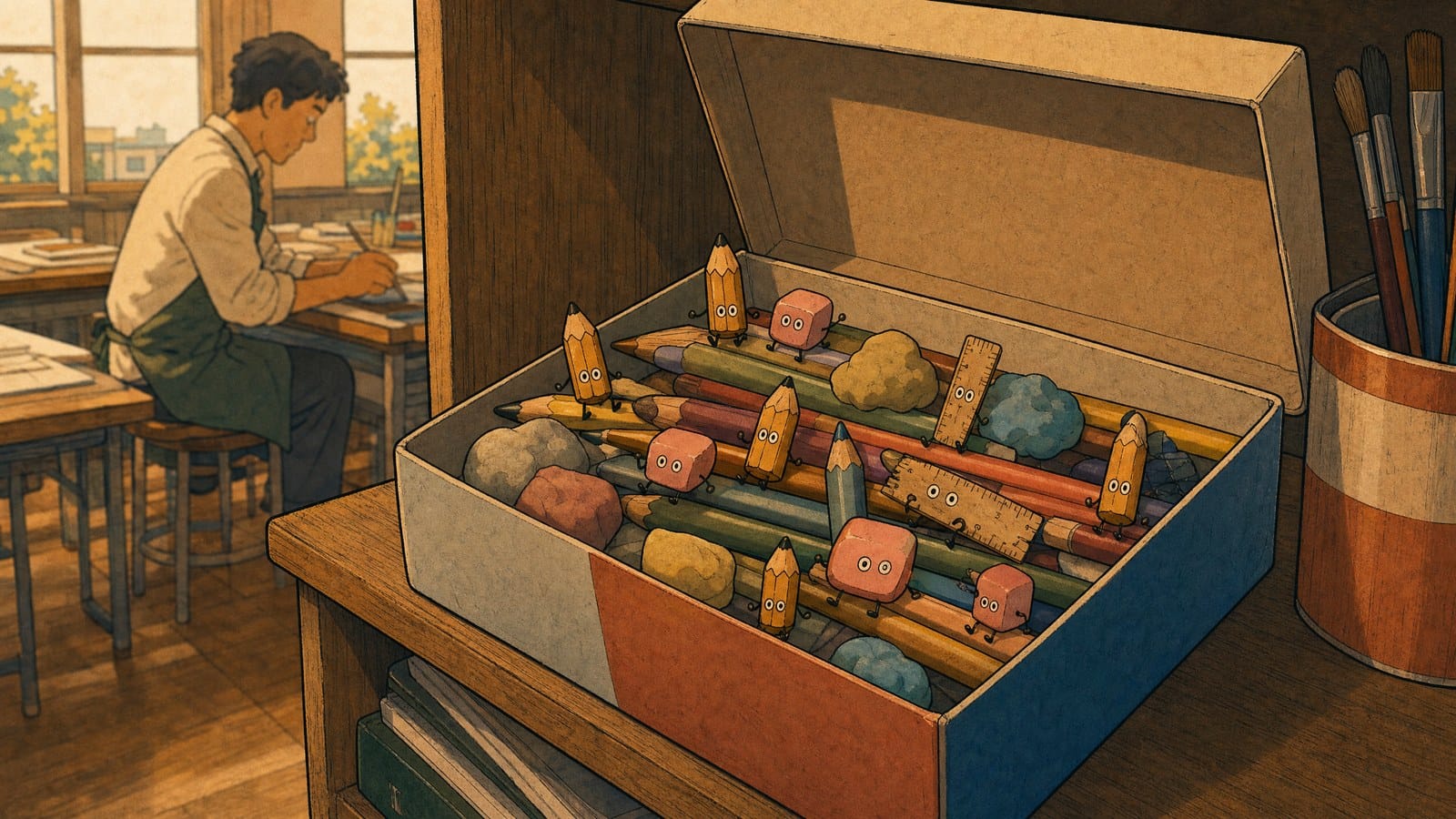
The art teacher — who had the particular equanimity of someone who has spent thirty years watching children glue things to other things — accepted the shoebox without asking many questions, put it on the shelf between the colored pencils and the modeling clay, and went back to grading.
By the end of the week, the art students had started calling the pencil stub “Enpitsu-san” and leaving it a small piece of paper to rest on.
It seemed fine with this.
(Next: Three days ago, it started raining inside the shrine. Outside the first torii gate, the sky is clear. Inside, constant drizzle. Shinobu’s scroll collection is not taking it well.)
Rin’s Journal Note
Twenty years under the same desks, and nobody noticed. Things don’t stop being real just because we stop looking. Sometimes being useful again is all they ever wanted.
(This week: a pencil-stub and eraser pair — the school’s oldest residents.)